




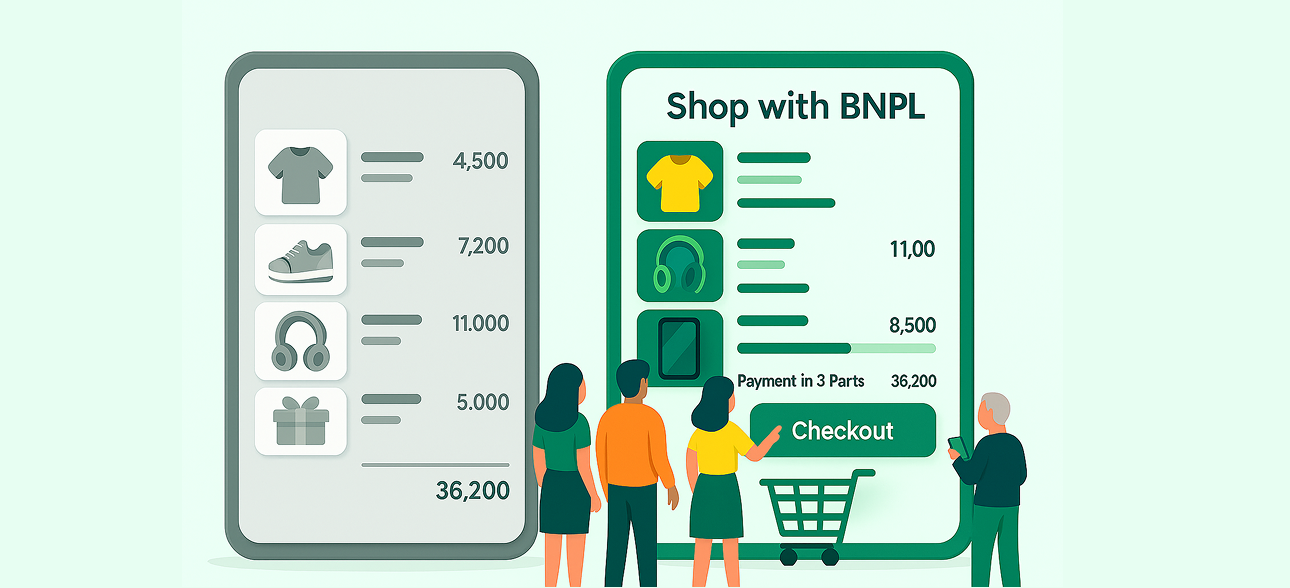
Key Takeaways:
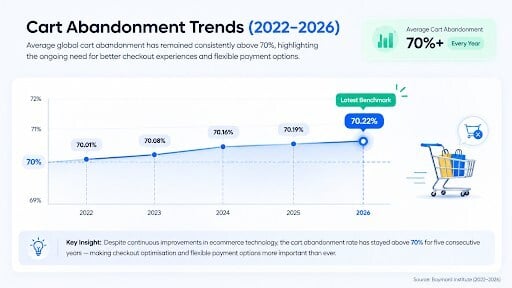
- Over 70% of online shoppers abandon carts, highlighting the importance of recovery strategies.
- BNPL reduces friction by lowering upfront costs, enabling faster checkout, and building trust with customers.
- Flexible payments encourage higher-value purchases, increasing revenue per customer.
- Automated emails, push notifications, and retargeting improve Shopify abandoned cart recovery.
- Combining BNPL with proven recovery strategies ensures consistent ecommerce cart recovery and higher conversions.
Introduction
In 2026, the average global cart abandonment rate is 70.22%, with rates soaring as high as 80% in the Asia-Pacific region. Businesses lose not just revenue, but also potential long-term customers due to friction at checkout.
Many shoppers leave their carts behind because of unexpected shipping fees, mandatory account sign-ups, lengthy checkout processes, concerns related to payment security, limited payment methods, or slow shipping. Even well-intentioned customers often abandon their carts when faced with these barriers, leaving retailers with unconverted traffic.
This is where Buy Now, Pay Later (BNPL) solutions like Snapmint come in. By offering flexible, instant, and secure payment options, BNPL can significantly reduce abandonment rates, helping businesses recover lost sales, increase average order value, and enhance customer satisfaction.
This detailed guide explains in detail the real reasons behind why shoppers abandon carts, the high impact fixes, and how to build a recovery flow that gets you back sales, while increasing AOV.
What is Cart Abandonment in eCommerce?
Cart abandonment occurs when a shopper adds one or more products to their online shopping cart but leaves the website without completing the purchase.
It is one of the most frequent issues dealt by ecommerce businesses, D2C brands, and online retailers because it directly impacts sales, revenue, and conversion rates. While some customers leave their carts because they are still comparing products, many do so because of checkout issues like extra hidden fees, few payment alternatives, or complicated checkout procedures.
Some common cart abandonment examples include adding products to the cart, reaching the checkout page, and leaving due to unexpected shipping charges or payment issues.
Cart Abandonment Varies by Industry
Not all ecommerce businesses experience the same level of cart abandonment. Industries selling high-value, highly considered, or comparison-heavy products generally see higher abandonment rates than businesses selling everyday essentials. Understanding your industry's benchmark helps set realistic expectations and identify opportunities for improvement.
|
Industry |
Average Cart Abandonment |
|
Travel & Hospitality |
87–90% |
|
Financial Services |
83–84% |
|
Fashion & Apparel |
68–75% |
|
Electronics |
71–79% |
|
Beauty & Cosmetics |
68–73% |
|
Grocery & FMCG |
50–58% |
Sources: Baymard Institute, Statista, ClickPost, SaleCycle
How to Calculate Cart Abandonment Rate
Cart Abandonment Rate Meaning:
The cart abandonment rate is the percentage of completed transactions and the initiated transactions where the customer added the product to their carts.
Cart Abandonment Rate Calculation:
Cart Abandonment Rate = 1 - (completed transactions/initiated carts) x 100
For example, if 100 users added items to their carts, but only 30 completed the purchase, your cart abandonment rate is 70%
1-(30/100) = 0.7
0.7 x 100 = 70
A 70% cart abandonment rate means that seven out of every ten shoppers leave without completing their purchase. Monitoring this metric regularly helps businesses identify checkout issues and measure the success of cart recovery initiatives.
Cart Abandonment Rate by Device: Mobile vs Desktop vs Tablet
Cart abandonment rates vary across devices because customers use each one differently during their shopping journey. While mobile is often used for product discovery and browsing, desktop is preferred for completing higher-value purchases.
|
Device |
Average Cart Abandonment Rate |
|
Mobile Phones |
75.50% |
|
Desktops |
69.04% |
|
Tablets |
68.55% |
- Mobile (75.50%) records the highest cart abandonment rate, largely due to checkout friction such as smaller screens, longer forms, and slower mobile experiences.
- Desktop (69.04%) sees lower abandonment rates as shoppers often prefer completing high-value purchases on larger screens with a smoother checkout experience.
- Tablets (68.55%) have the lowest abandonment rate, likely because users browse in a more relaxed environment with a better viewing experience than smartphones.
Source: Click Post AI
What is BNPL?
Buy Now, Pay Later (BNPL) is a payment method that allows customers to purchase products immediately and pay for them over time in smaller instalments. Depending on the provider, repayments may be interest-free if made within the agreed period. BNPL simplifies checkout by reducing the upfront payment burden, making it easier for customers to complete purchases.
For ecommerce businesses, BNPL doesn't just improve affordability. It also reduces checkout friction, increases average order value, and helps recover abandoned carts. This is where providers like Snapmint help merchants offer flexible payment options at checkout.
BNPL Benefits for Shoppers
For shoppers, BNPL is beneficial because:
- You can buy more without worrying about the upfront cost.
- You can upgrade the quality/quantity of your purchase without burdening your pocket.
- Simplified checkout process
- More purchase confidence
BNPL Benefits for Merchants
For merchants, offering BNPL can be a growth driver. BNPL providing companies can help D2C brands in many ways:
- You will get higher conversion rates, increased average order value (AOV), and improved GMV.
- Offering BNPL builds trust and repeat purchases by aligning with shoppers’ financial comfort.
- By offering BNPL, your brand gets a competitive advantage by providing affordability.
Why Cart Abandonment Happens?
Even the most interested shoppers sometimes leave without completing a purchase. For e-commerce businesses, understanding the why behind these abandoned carts is key to improving conversions. Here are the main reasons:
1. Unexpected Costs at Checkout
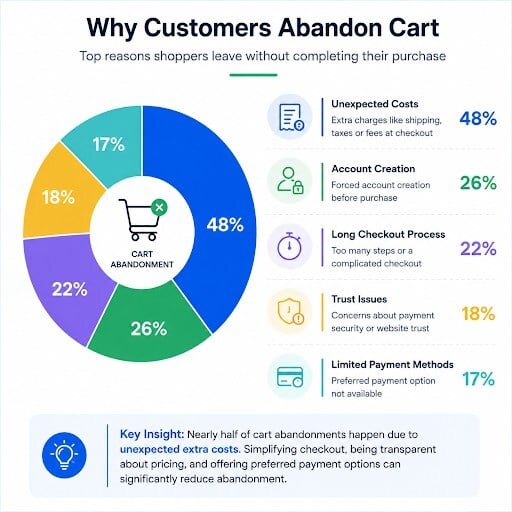
Extra shipping fees, taxes, or handling charges often catch customers by surprise, prompting them to rethink their purchase. 48% of shoppers abandon due to unexpected extra costs.
2. Mandatory Account Creation
Forcing shoppers to create an account adds friction. Many prefer guest checkout, and not offering it can lead to drop-offs. Around 26% of customers leave when forced to create an account before purchasing.
Suggestion: Offer guest checkout while giving customers the option to create an account after the purchase is complete.
3. Lack of Trust
Concerns about payment security, website credibility, or data privacy can make customers hesitate to complete their purchase. 18% hesitate because they don't trust the website with their payment information.
4. Slow or Limited Delivery Options (Slow Delivery or Limited Shipping Options)
Long delivery times or restrictive shipping choices can frustrate customers, leading them to abandon their carts for more convenient options.
5. Complicated Checkout Process (Complicated or Slow Checkout Process)
Lengthy forms, confusing navigation, or technical glitches disrupt the buying process, especially on mobile devices.
A streamlined, mobile-friendly checkout experience significantly improves conversion rates. Baymard's checkout usability research identified more than 2,700 checkout usability issues across major ecommerce websites, showing that even leading brands still create unnecessary friction during checkout.
6. Unclear or Restrictive Return Policies
If customers aren’t confident they can return or exchange items easily, they may abandon the purchase altogether.
7. Website Issues (Technical Glitches and Page Load Time)
Slow load times, errors, or crashes during checkout create friction and push shoppers away. Poor mobile optimisation is another major contributor to cart abandonment, as a significant share of ecommerce purchases now take place on smartphones.
8. Limited Payment Methods
Not offering multiple payment options, credit/debit cards, wallets, UPI, or BNPL, can prevent some customers from completing the transaction.
9. Difficult Coupon or Discount Usage
Hidden or hard-to-apply discounts frustrate customers and can lead to abandoned carts. Ensure that coupons are easy to apply and clearly communicate any eligibility criteria before customers reach the payment page.
10. No Follow-Up on Abandoned Carts
Without reminders via email, SMS, or push notifications, many potential buyers slip away unnoticed.
11. Price Comparison & Window Shopping
Many customers add products to their carts simply to compare prices across different websites or to save products for future consideration. While this behaviour is common, businesses can encourage conversions by offering competitive pricing, limited-time offers, or value-added benefits such as free shipping or flexible payment options.
How BNPL Reduces Cart Abandonment
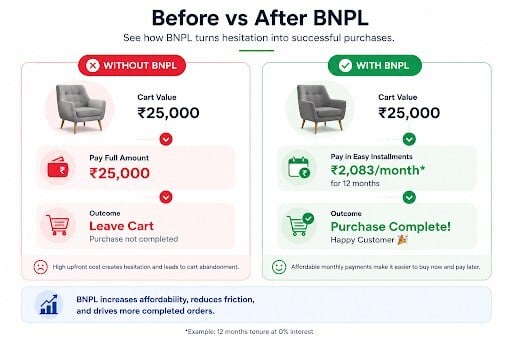
BNPL (Buy Now, Pay Later) helps e-commerce businesses recover abandoned carts by making checkout faster, easier, and more flexible.
- Lower Upfront Costs: Splitting payments makes it easier for customers to complete purchases, boosting Shopify's abandoned cart recovery.
- Faster Checkout: Instant approvals reduce friction, improving ecommerce cart recovery.
- Builds Trust: Secure, transparent payments reassure shoppers and encourage completion.
- Higher-value Purchases: Flexible payments motivate customers to buy more, increasing revenue.
- Improved Customer Experience: Beyond affordability, BNPL improves the overall shopping experience by giving customers greater flexibility in how they pay. When combined with a fast checkout process and clear payment terms, it can contribute to higher customer satisfaction and stronger long-term loyalty.
Integrating BNPL into your checkout isn’t just convenient; it actively reduces cart abandonment and drives ecommerce cart recovery.
Shopify Abandoned Cart Recovery: Proven Methods to Recover Abandoned Carts
Recovering abandoned carts is critical for any e-commerce business, and Shopify stores have multiple tools to help. Here are proven methods to boost Shopify abandoned cart recovery:
1. Automated Cart Recovery Emails
Send timely, personalized emails to remind customers of their abandoned items. Include product images, clear CTAs, and urgency cues to encourage completion.
Pro Tip: The first recovery email generally performs best when sent within the first hour of cart and no abandonment.
2. Offer Pay-in-Parts Options
Offering multiple payment methods, including UPI, cards, wallets, EMI, and Buy Now, Pay Later (BNPL), helps accommodate different customer preferences. Integrating BNPL or EMI methods reduces friction at checkout, improving ecommerce cart recovery rates.
3. Push Notifications & SMS Alerts
Reach mobile shoppers instantly with reminders and special offers to recover abandoned carts. For better engagement:
- Mention the abandoned product.
- Include a direct checkout link.
- Highlight limited-time offers only when genuinely available.
4. Simplify the Checkout Process
Allow guest checkout, reduce steps, and fix technical glitches to minimize drop-offs. Businesses should:
- Offer guest checkout
- Reduce unnecessary form fields
- Enable address auto-fill
- Provide express checkout options
Even small improvements in checkout usability can significantly increase purchases.
5. Incentivise Completion
Offer discounts, free shipping, or limited-time promotions to motivate hesitant shoppers.
6. Retargeting Campaigns
Use social media and display ads to remind visitors about abandoned items, driving them back to your store.
7. Monitor Checkout Performance
Recovering abandoned carts isn't just about sending reminders. Businesses should continuously monitor checkout performance to identify friction points.
Track metrics such as:
- Cart Abandonment Rate
- Checkout Completion Rate
- Average Order Value (AOV)
- Payment Failure Rate
- Mobile vs Desktop Conversion Rate
Analysing these metrics helps merchants make data-driven improvements to their checkout experience.
By combining these strategies with BNPL, Shopify merchants can recover more carts, increase conversions, and maximise revenue.
Shopify Abandoned Cart Recovery with BNPL
Reduce shopping cart abandonment by using BNPL and EMI to offer affordability to your customers. Here are some ways BNPL can aid your Shopify abandoned cart recovery:
1. Highlight BNPL During Checkout
Show easy EMI options clearly at the Shopify abandoned cart or WooCommerce abandoned cart stage to remind shoppers they can pay later, helping reduce shopping cart abandonment.
2. Promote Trust with Snapmint’s BNPL Badges
Add Snapmint’s secure payment badges to your checkout page. This boosts confidence in abandoned carts for Shopify and abandoned carts for WooCommerce, making buyers more likely to complete payment. Snapmint is an RBI-licensed NBFC building trust with shoppers.
3. Combine BNPL with Free Shipping or Discounts
Encourage hesitant shoppers to return to their abandoned checkout by pairing BNPL with small perks like free delivery or limited-time offers, an effective way to reduce cart abandonment.
4. Measure Impact Using Analytics
Track how BNPL influences recovery rates in your Shopify abandoned cart and WooCommerce abandoned cart data. Use insights to refine your strategy and recover more lost sales.
Why Snapmint Drives E-Commerce Cart Recovery?
Integrating BNPL (Buy Now, Pay Later) solutions like Snapmint provides a proven way to boost ecommerce cart recovery, increase average order value, and enhance the overall customer experience. When combined with strategies such as automated recovery emails, push notifications, simplified checkout, and retargeting campaigns, Shopify merchants can significantly reduce cart abandonment and maximise revenue.
.png?width=1700&height=616&name=Group%201597882553%20(1).png)
FAQs