

Key Takeaways:
- Gross Merchandise Value (GMV) measures demand and transaction scale, not profitability.
- GMV is calculated before discounts, returns, taxes, and platform fees, which is why it often looks higher than revenue.
- Sustainable GMV growth comes from improving repeat purchases, AOV, conversion, and checkout experience, not just driving more traffic.
- Net Merchandise Value (NMV), AOV, CAC, CLTV, and return rates must be tracked alongside GMV for real business insight.
- Payment flexibility solutions like No-Cost EMI can increase AOV and conversion without increasing acquisition costs.
Introduction
You’ve probably seen Gross Merchandise Value pop up everywhere.
Investor decks. Startup news articles. Board meetings. Even LinkedIn posts celebrate “100 Cr GMV achieved.”
But, exactly why is GMV being celebrated? What is GMV?
Gross Merchandise Value has become one of the most widely used indicators of scale and demand in today’s market. GMV is often the first signal that your business is generating real transaction volume.
In this blog, let us look at Gross Merchandise Value through a B2B lens so you can understand what it really tells you about scale, demand, and growth of the business . Whether you are a start-up founder who is still trying to get hold of things or a seasoned marketeer heading the marketing team, this guide will help you use GMV without losing sight of revenue and profitability.
In this blog, we will talk about how GMV is different from revenue, when it matters most, and how founders and marketing leaders can use it to make better growth decisions, not just better slides.
What Is Gross Merchandise Value (GMV)?
Gross Merchandise Value (GMV) represents the total value of products sold by a business over a specific period, calculated before deducting discounts, returns, taxes, shipping, or platform fees.
In simple terms, Gross Merchandise Value answers one core question:
How much did the company generate in sales?
GMV measures the value of the products sold, not how much the business actually made from those sales. It does not talk about the company’s profit, just the sales.
Gross Merchandise Value vs Gross Sales
Gross Merchandise Value (GMV) and gross sales are often used interchangeably, but they serve slightly different purposes for a D2C business.-
Gross Merchandise Value vs Gross Sales
Gross Merchandise Value (GMV) and gross sales are often used interchangeably, but they serve slightly different purposes for a D2C business.
- Gross Merchandise Value (GMV) focuses on the total value of goods sold, commonly used by:
- Marketplaces
- Multi-vendor platforms
- D2C brands tracking demand at scale
- Gross Sales usually refers to the total invoiced sales recorded by a business before returns and allowances and is more commonly used in accounting contexts.
- Marketplaces
- Multi-vendor platforms
- D2C brands tracking demand at scale
- Gross Merchandise Value (GMV) focuses on the total value of goods sold, commonly used by:
- Gross Sales usually refers to the total invoiced sales recorded by a business before returns and allowances and is more commonly used in accounting contexts.
How to Calculate Gross Merchandise Value (GMV)
Calculating GMV is basic for any online or retail business.
Gross Merchandise Value Formula
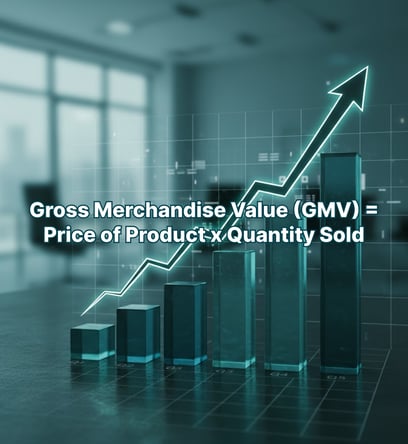
Gross Merchandise Value (GMV) = Price of Product × Quantity Sold
Gross Merchandise Value Calculation Examples
You calculate Gross Merchandise Value by adding up the selling price of every item sold within a defined period, regardless of discounts, refunds, or future returns.
Example:
- Product price: ₹2,000
- Units sold: 150
Gross Merchandise Value = ₹2,000 × 150 = ₹3,00,000
Even if discounts were applied later or returns occurred, the Gross Merchandise Value remains ₹3,00,000 for that period.
This number reflects the total transaction value generated, not the revenue retained by the business.
Why Gross Merchandise Value (GMV) Is Important for eCommerce Businesses?
Measures Overall Sales Activity
Gross Merchandise Value shows the total volume of transactions happening in the business, regardless of margins or costs.
It helps founders understand demand strength, category traction, and whether customers are actually buying at scale.

Monitor your Business's Growth
When you track GMV on a month-to-month basis or year-to-year, you can see whether your growth is real and consistent over time. It also helps separate temporary surges in revenue from sustained increases in customer demand and order volume.
Evaluate Sales Performance Across Channels
You can compare the same items sold on different sales channels using GMV, despite differences in pricing, commissions, or margin. This allows you to identify what sales channels are truly providing scale to your business.
Gross Merchandise Value (GMV) vs Revenue: Understanding the Difference
Gross Merchandise Value and revenue often get discussed together, but they answer very different questions for e-commerce businesses.
Gross Merchandise Value shows how much was sold. Revenue shows how much you actually took home.
That gap between the two is where most confusion comes from.
Why Gross Merchandise Value Can Be Higher Than Revenue?
Gross Merchandise Value is counted before anything is deducted. Revenue is calculated after.
So, if you’re:
- Running offers
- Dealing with returns
- Paying platform fees
Your Gross Merchandise Value (GMV) will naturally look bigger than your revenue.
Why fast-growing brands often show high Gross Merchandise Value but lower profits?
Fast growth usually means pushing demand hard. More ads, more offers, more channels. That lifts Gross Merchandise Value quickly.
But profits take longer to catch up. Until margins, returns, and acquisition costs stabilise, high Gross Merchandise Value often comes with thinner profits.
This is why, as an e-commerce business founder, you need to focus on the wider picture, not just gross merchandise value.
How to Improve Gross Merchandise Value (GMV): 8 Proven Strategies
Here are some strategies to improve GMV for your online or retail business:
1. Increase Repeat Purchases
Getting an existing customer to buy again is easier than finding a new one. Improve retention with reminders, re-order nudges, and simple loyalty incentives to uplift GMV without burning acquisition budgets.
You can try out strategies to turn one-time buyers into repeat customers to increase your GMV without spending on ads.
2. Improve Average Order Value (AOV)
If your shopper buys more in one order, your GMV improves without any extra effort. So, focusing on higher AOV means better GMV. Now, how can you increase AOV? Check out this blog on 14 proven ways to increase your average order value.
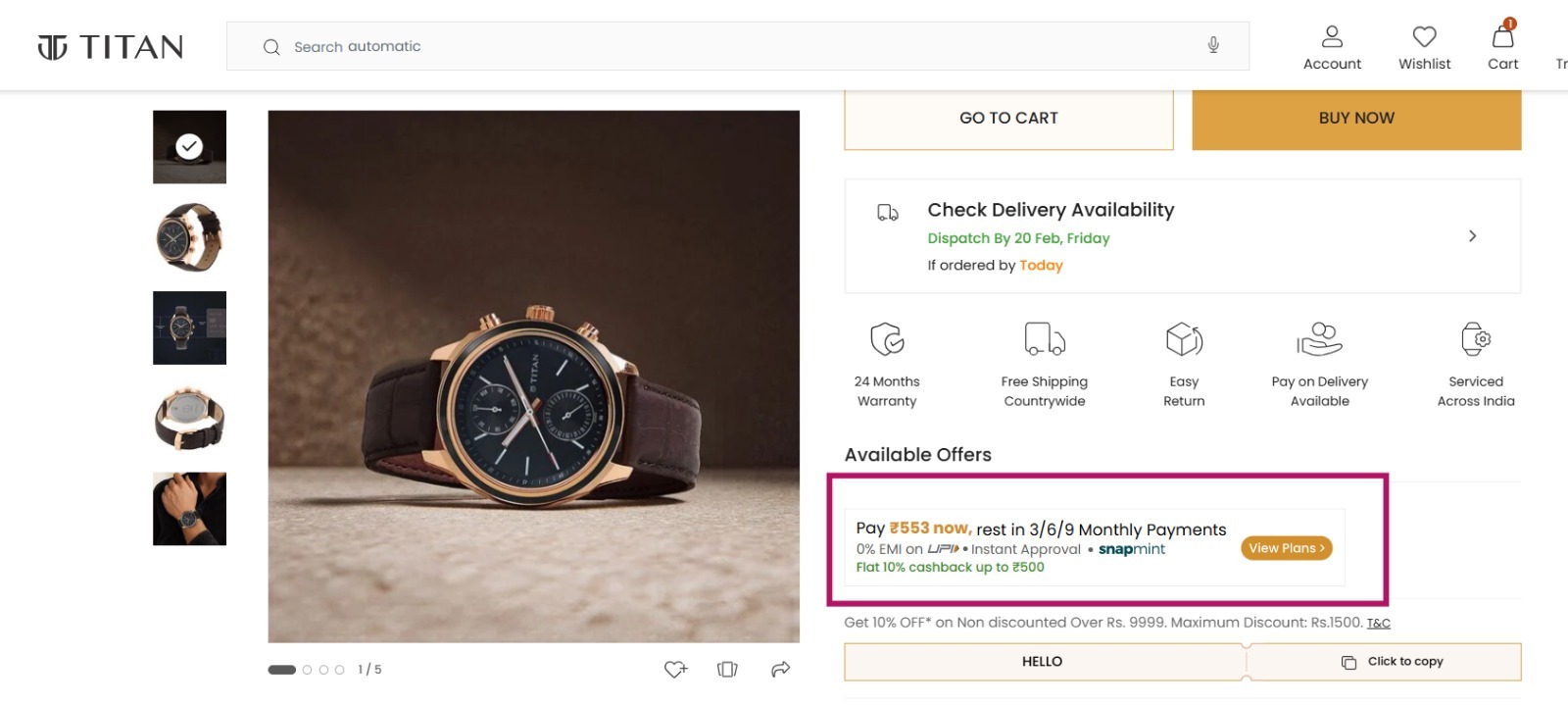
Snapmint helps you increase your average order value by offering easy monthly EMI for your shoppers.

3. Focus on Conversion, Not Just Traffic
More visitors don’t always mean more GMV. Improving product pages, optimising checkout flow, and trust signals often deliver faster GMV gains than increasing ad spend.
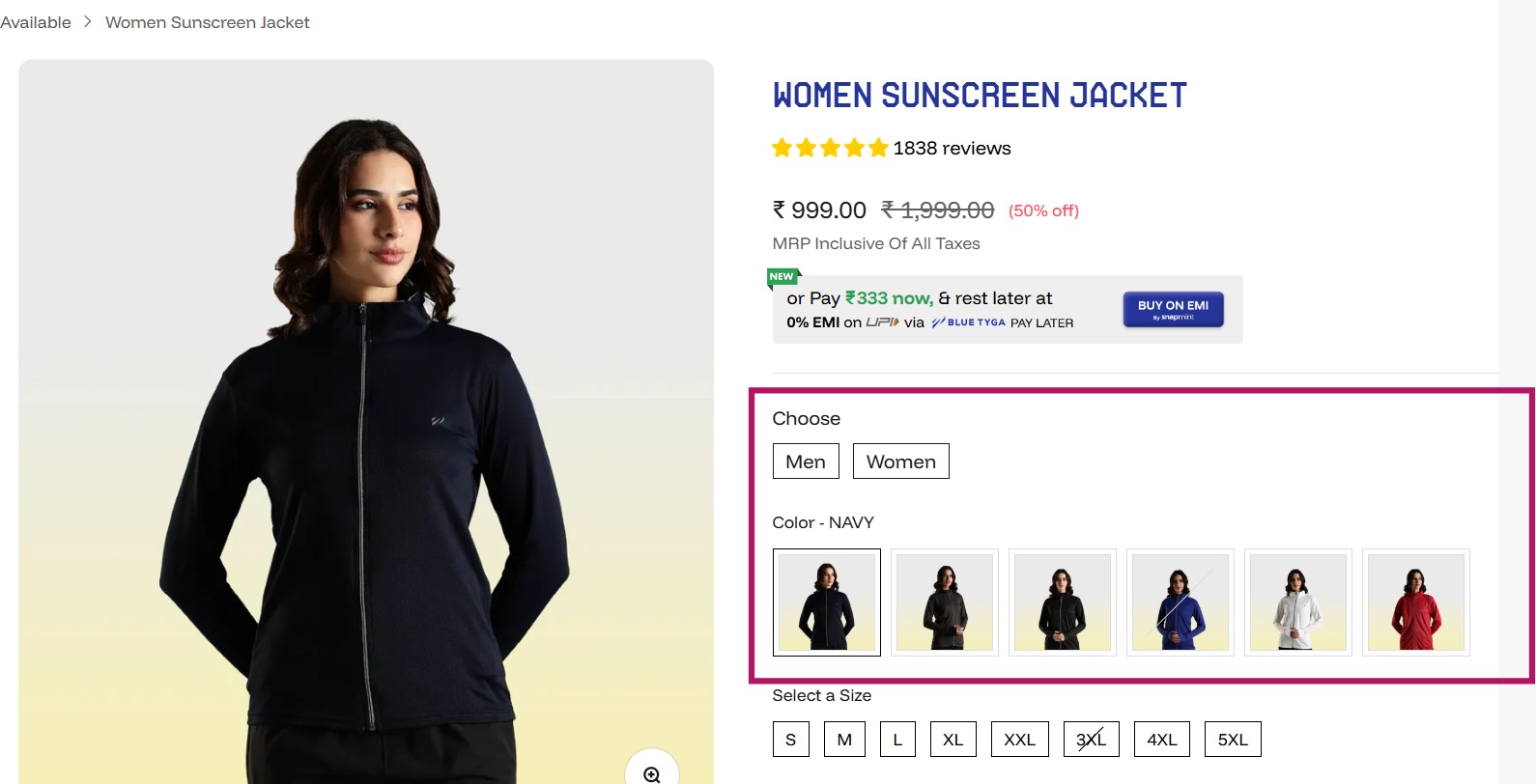
You can increase your add-to-cart rate with Snapmint integration.
4. Use Discounts Strategically
Sales can be increased using discounts; however, there is a right way to execute this strategy. You can provide cart value thresholds and/or limited-time sales to uplift the GMV.
5. Expand Product Assortment Thoughtfully
Adding relevant SKUs gives customers more reasons to buy in one go. Done right, it increases both order frequency and basket size, directly lifting GMV.
6. Double Down on High-Performing Channels
Not all channels contribute equally to GMV, right? So why would you waste your resources on every channel equally? Identify where larger baskets and better repeat rates come from, and scale those channels instead of spreading budgets thin.
Result? You’ll get higher GMV without stretching your marketing budget.
7. Reduce Friction in Checkout
Imagine going to a store. You have selected everything you want. Now you move to the cash counter, but suddenly, you have to fill out forms, get redirected to different counters, and answer hundreds of questions before you buy.
Isn’t that irritating? What are the chances you’ll drop your purchase out of frustration? This is what happens when your checkout has too many steps. Every extra step loses orders. Reducing friction at this step will improve your GMV without any extra effort.
8. Leverage Seasonal and Event-Led Demand
Festivals, paydays, and category-specific events naturally increase buying intent. When you plan campaigns around these, you can grow GMV without forcing demand.
Limitations of Gross Merchandise Value (GMV)
GMV is important, but it's not the ultimate metric for your company. There are quite some limitations when you only look at GMV alone.
-
Gross Merchandise Value does not show profitability
Gross Merchandise Value tells you how much was sold, not how much you made. A growing GMV can exist even when your margins are shrinking or cash flow is negative, which is why it’s a weak indicator of the financial health of the business.
-
High GMV can hide:
- High return rates: Orders are placed, GMV goes up, but money flows back out.
- Heavy discounting: Sales volume increases, but at the cost of your margins.
- Low contribution margins: Fulfilment, marketing, and platform costs eat into every order.
Why Gross Merchandise Value should never be viewed alone?
Gross Merchandise Value works best as a context metric, not a success metric. It needs to be read alongside revenue, margins, return rates, and customer acquisition costs to reflect real business performance.
Used alone, it tells an incomplete story. Used correctly, it helps explain growth without hiding the economics.
Metrics to Track Alongside Gross Merchandise Value (GMV)
Since GMV doesn’t give you the entire picture, here are some metrics you should track alongside GMV.
-
Net Merchandise Value (NMV)
Net Merchandise Value reflects GMV after accounting for returns, refunds, and cancellations. It gives a clearer picture of the actual value retained from the orders placed.
-
Revenue and contribution margin
Revenue shows what the business actually earns, while contribution margin reveals how much is left after variable costs.
Together, they explain whether GMV growth is financially healthy.
-
Average Order Value (AOV)
Average Order Value measures the average amount spent per order. It helps understand whether GMV growth is coming from bigger baskets or simply more orders.
-
Customer Lifetime Value (CLTV)
Customer Lifetime Value estimates the total revenue a customer generates over their relationship with the brand. It’s key to understanding long-term value beyond one-time GMV spikes.
-
Customer Acquisition Cost (CAC)
Customer Acquisition Cost tracks how much you spend to acquire a customer. Comparing CAC against GMV and CLTV shows whether growth is efficient or expensive.
-
Return and refund rate
The return rate metric shows how much of your GMV is being reversed. High RTO or refund rates often explain why strong GMV doesn’t translate into revenue or profit.
Wanna know how to reduce RTO in e-commerce? Read: 15 proven strategies to reduce RTO.
Gross Merchandise Value (GMV) Trends & Benchmarks for 2026
India’s e-commerce industry, valued at Rs. 10,82,875 crore (US$ 125 billion) in 2024, is projected to grow to Rs. 29,88,735 crore (US$ 345 billion) by 2030, As per IBEF.
E-commerce sales were projected to cross Rs. 1.15 lakh crore GMV in October 2025, growing 20–25% year-on-year.
Quick commerce is projected to surge at 150% YoY.
As per a report by McKinsey, there has been an 83% increase in B2B decision-makers willing to make ecommerce purchases worth $10 million or more.
.png?width=1700&height=616&name=Group%201597882553%20(1).png)
FAQs