





Key Takeaways:
- Add-to-Cart Rate (ATC) shows how many visitors are moving from browsing to buying intent, which is the first big signal of product interest.
- For D2C brands, a good ATC rate is above 10%, an average is 6–10%, and below 5% means you need urgent fixes.
- Offer affordability with Snapmint BNPL so shoppers can split payments into easy EMIs without credit cards, reducing cart abandonment and boosting conversions.
- To increase ATC, optimize product pages, build trust with social proof, personalize recommendations, and focus on mobile-first design.
- Reduce buyer friction with clear policies, size guides, and transparent costs; use urgency/FOMO to nudge action; and re-engage smartly with retargeting
Introduction:
D2C founders know the struggle all too well; getting shoppers to your website is only half the battle. The real challenge? Turning browsers into buyers. One of the biggest targets is to improve Add to Cart rate, which directly impacts conversions and revenue. If your ATC rate is stagnant, you’re practically leaving money on the table.
The good news? With the right strategies, you can improve add-to-cart rate and transform hesitant visitors into confident buyers.
What is the Add-to-Cart Rate?
Your website is basically an online store. Just how people walk in, look around, pick up a product, and drop it in their shopping basket in a store, the same happened on your website too.
That metric, when they add something to their cart, is exactly what the add-to-cart rate measures.
In simple words, it’s the percentage of visitors who show interest in buying by clicking the “Add to Cart” button.
So, if 1,000 people visit your store in a day and 100 of them add something to the cart, your add-to-cart rate is 10%.
Why Increasing Add-to-Cart is Critical for D2C Brands?
You might think - add-to-cart does not mean a sale. It doesn’t guarantee a purchase; plenty of carts get abandoned, so why does it even matter?
Even though ATC does not guarantee a purchase, it’s a strong signal that people are liking what they see, i.e, your products.
It’s the clearest sign that a casual browser is turning into a potential buyer. The higher your ATC rate, the more people are moving down the purchase funnel.
Here’s why it’s so important:
Revenue growth starts here
Even though cart addition is not equal to sale, every sale starts from here. No “Add to Cart,” no sale. It's that simple. The add to cart rate in ecommerce in India is an indication of growing online businesses.
Stronger retargeting opportunities
Even if someone doesn’t buy, you now know what caught their eye. That makes your remarketing smarter and more personalized. So, it is not a lost sale, it is an opportunity.
Tells if your product is a good fit for the market
If lots of people add items but barely anone check out, you know exactly where the friction lies: pricing, trust, or checkout process. This way, you can work on the challenges that stop your customers from buying.
Customer psychology insight
A healthy ATC rate tells you that your product pages are convincing for people and your offers are working.
In short, improving add-to-cart isn’t just about boosting numbers; it’s about making your brand more irresistible at the very first step of conversion.
Add-to-Cart for D2C brands: What’s considered low, average, or good ATC (Indian ecommerce benchmarks)
If you’re running a D2C store, your add-to-cart rate is one of the clearest signals of how well your website and products are connecting with shoppers. What are the Indian e-commerce benchmarks? Let’s find out:
| Low ATC | Below 5% | This means your website needs immediate action and rectification. |
| Average ATC | 6 - 8% | It shows that your site is working reasonably well, but you still have opportunities to improve. |
| Good ATC | 8% or higher | This is great, maintain this add-to-cart rate for steady growth. |
Source: https://marketing.dynamicyield.com/benchmarks/add-to-cart-rate/
According to data, as of 2024, the average add-to-cart rate for the Indian e-commerce market was ~9%while the cart abandonment rate was over 74%.
Industry-vise Major ATC Trends
| Industry | Average Add-to-Cart Rate |
| Home & Furniture | 4-5% |
| Luxury & Jewelry | 2-2.5% |
| Food & Beverage | 7-8% |
| Consumer Goods | 4-5% |
| Fashion, Accessories, and Apparel | 6-7.5% |
| Multi-Brand Retail | 7-10% |
Source: https://marketing.dynamicyield.com/benchmarks/add-to-cart-rate/
Pro tip: Don’t obsess over chasing “marketplace-level” numbers. As a D2C brand, your edge lies in building a deeper connection with customers and nurturing loyalty, not just in pushing one-time add-to-carts.
32 Strategies to Increase Add-to-Cart
Let’s cut to the chase. Now you know why you need an above-average ATC rate, how a high add-to-cart rate helps brands, and why you need to improve add to cart rate.
So, how can you increase add to cart rate? Here are some strategies that brands use to improve add to cart rate and ecommerce conversion in India:
Optimize Product Pages for Maximum Impact
Shoppers come to your product page and just leave - why is that? Maybe because your product page is not solving their queries.
Anyone who searched a query and landed on your product page is definitely looking for the ‘said product’, right? But the product page does not meet their expectations, whether it’s about product quality, trustworthiness, or many other things.
What can you do to optimize product pages? Here are a few strategies for D2C ecommerce optimization in India:
1. Use a clear, prominent “Add to Cart” button
This is one of the most important strategies for Shopify add to cart optimization. Your ATC button should stand out instantly when users land on the page. A high-contrast color, placed above the fold, ensures shoppers don’t have to search for the next step.
You can also use colour psychology to select the best colour for your add-to-cart button.
2. Make the ATC button sticky on mobile
Mobile users scroll a lot before deciding. You don’t want your user to scroll all the way back up, to click the ATC button, because that may result in a lost sale.
A sticky ATC button keeps the action visible at all times, reducing friction and increasing add-to-cart clicks.
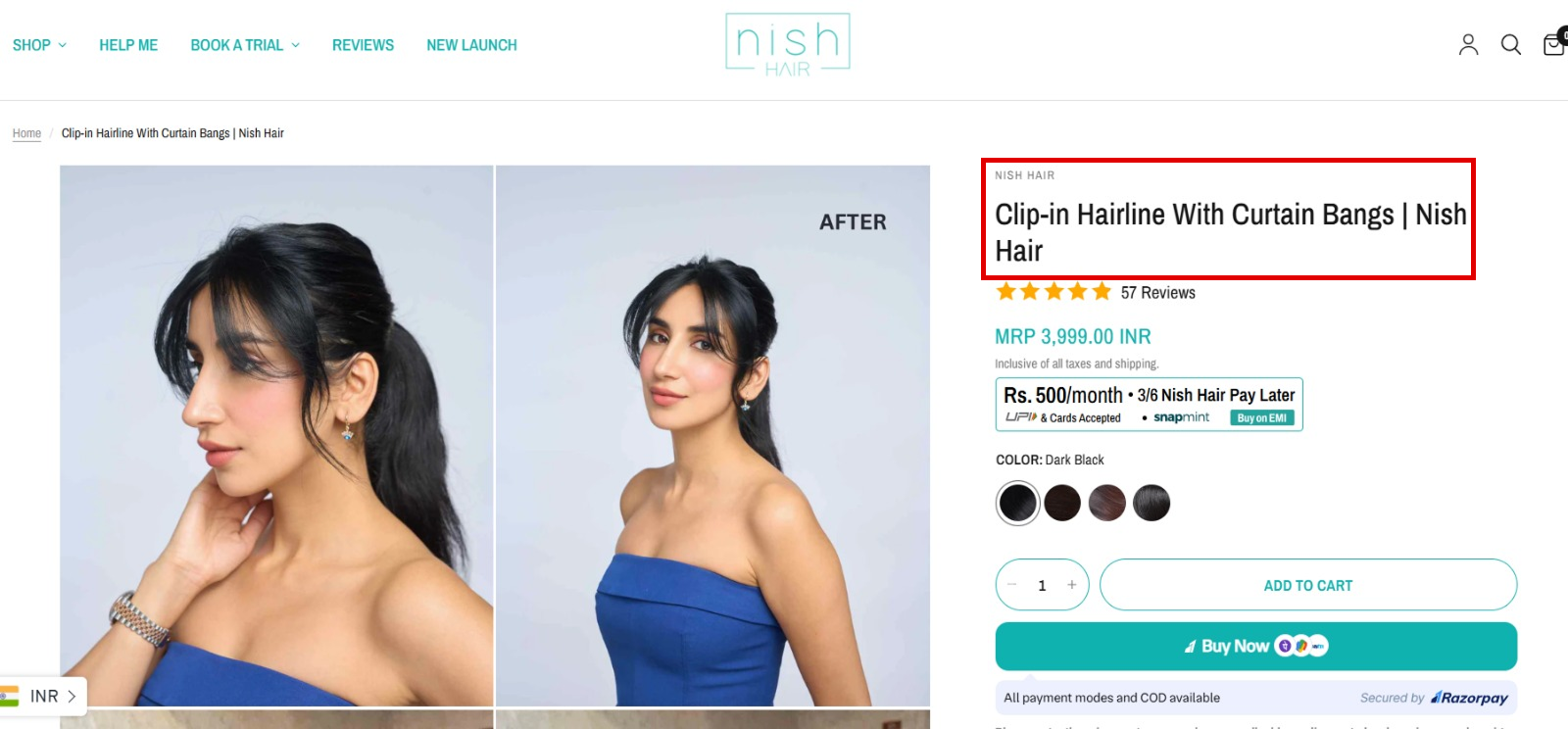
3. Optimize product titles for clarity, not creativity
Shoppers want clarity, not clever wordplay. Clearly mention the product type, key benefit, and variant so users instantly know they’re in the right place.
For example, in case of Nish Hair, the product title clearly explains product type (clip-in) and style (bangs) instead of vague creative titles.
4. Show price clearly and upfront
Hidden or delayed pricing creates doubt in the shopper’s mind. When shoppers see the price immediately, they can decide faster and feel more confident moving ahead with their purchase.
5. Display discounts & savings visually
Visual cues like strike-through MRPs, % off tags, or “You save X rupees” make offers easy to understand. They highlight value and push users toward quicker decisions. When users see that they are saving, they spend less time thinking about the purchase, and go ahead easily.
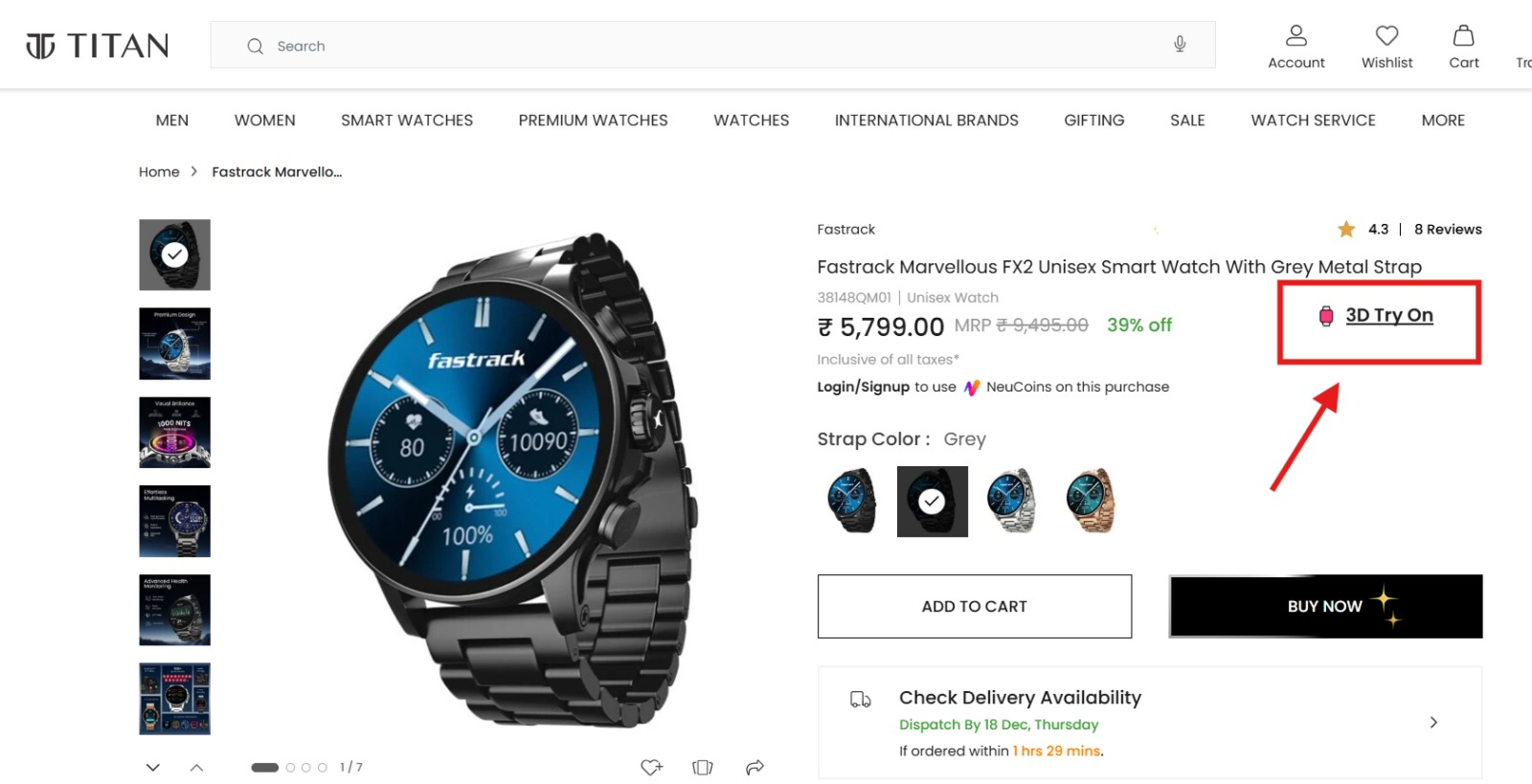
6. Add high-quality product images (multiple angles)
Images replace the in-store experience online. Multiple angles, zoom, and lifestyle shots help shoppers visualize the product and reduce uncertainty.
7. Include product videos or short demos
Videos show how the product looks, feels, and works in real life. This builds confidence and answers questions that images alone cannot. This is a major strategy for Shopify add to cart optimization.
8. Highlight key benefits above the fold
Don’t make users scroll to understand value. Short bullet points highlighting key benefits help shoppers decide within seconds.
9. Show variant availability clearly
Size, color, and stock options should be easy to spot and select. Confusing variant selection often leads to drop-offs before ATC.
10. Use urgency signals
Messages like “Only 3 left” or “Selling fast” tap into FOMO. They push hesitant shoppers to act now instead of postponing the decision. This not only increases your add-to-cart rate, but also increases conversion and reduces cart abandonment.
Build Trust with Social Proof
When shoppers land on your product page, they’re not just looking at the product, they’re looking for reassurance from customers like themselves. Social proof is the quickest way to build that trust and nudge them toward clicking “Add to Cart.”
Showcase customer reviews, UGC, influencer shoutouts, and testimonials. Honest feedback from real buyers gives new visitors the confidence that your product delivers on its promises.
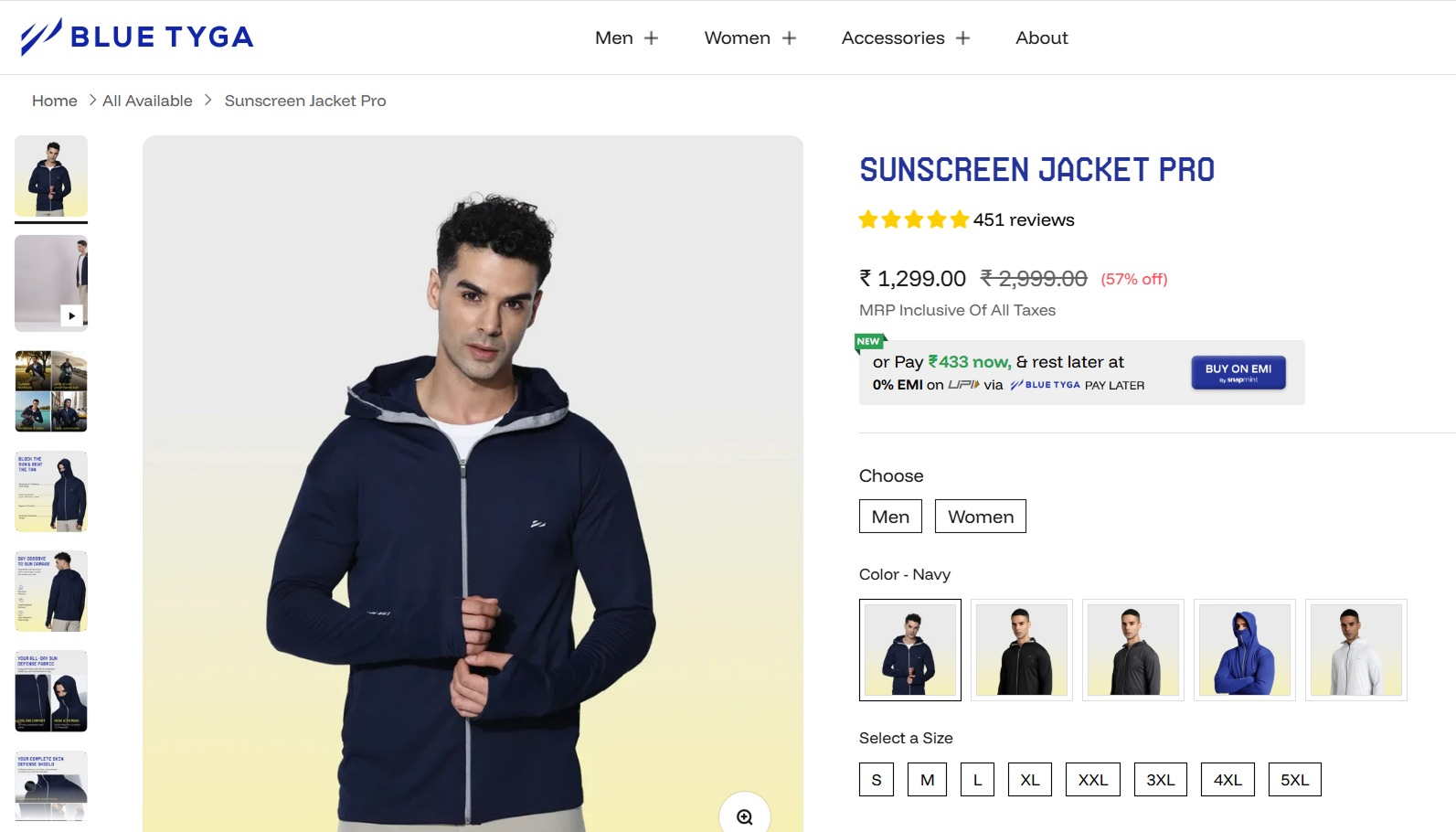
11. Display ratings and reviews near the ATC button
Shoppers look for reassurance right before clicking ATC. Giving ‘number of reviews’ in the first fold helps build trust. You can even place a few reviews near the ATC button for better visibility.
12. Highlight recent purchases
Messages like “25 people bought this today” signal popularity. This social validation makes products feel safer and more desirable.
13. Show trust badges
Beyond voices, visual cues matter too. Trust badges like “Secure Checkout,” “Free Returns,” or “COD Available” act as instant confidence boosters. These trust elements actually show customers that their money is safe and that buying from your brand is risk-free.
This is especially helpful when your brand is fairly new.
14. Add return & refund reassurance
Clear return and refund policies reduce RTO rates. When shoppers know they can return easily, they’re more willing to add to cart. This is one of the most important strategies for D2C brand conversion optimization.
15. Show delivery timelines clearly
Unclear delivery dates create anxiety. Displaying estimated delivery before checkout builds confidence and prevents last-minute drop-offs.
The result? Your brand feels reliable, your products feel worth trying, and shoppers feel more comfortable adding items to their cart and eventually purchasing them.
Add Affordability Options and Pay-in-Parts
One of the biggest reasons shoppers hesitate to hit “Add to Cart” is pricing. When the total feels heavy, they may browse but never take action. By offering EMI or pay-in-parts options, you make your products instantly more affordable and accessible.
16. Offer Pay Later / No-Cost EMI options
High prices often stop users from acting immediately. EMI options or Pay Later flexibility make products feel instantly more affordable and approachable.
In fact, Snapmint integration has proven to increase PDP to cart uplift by 25-30%.
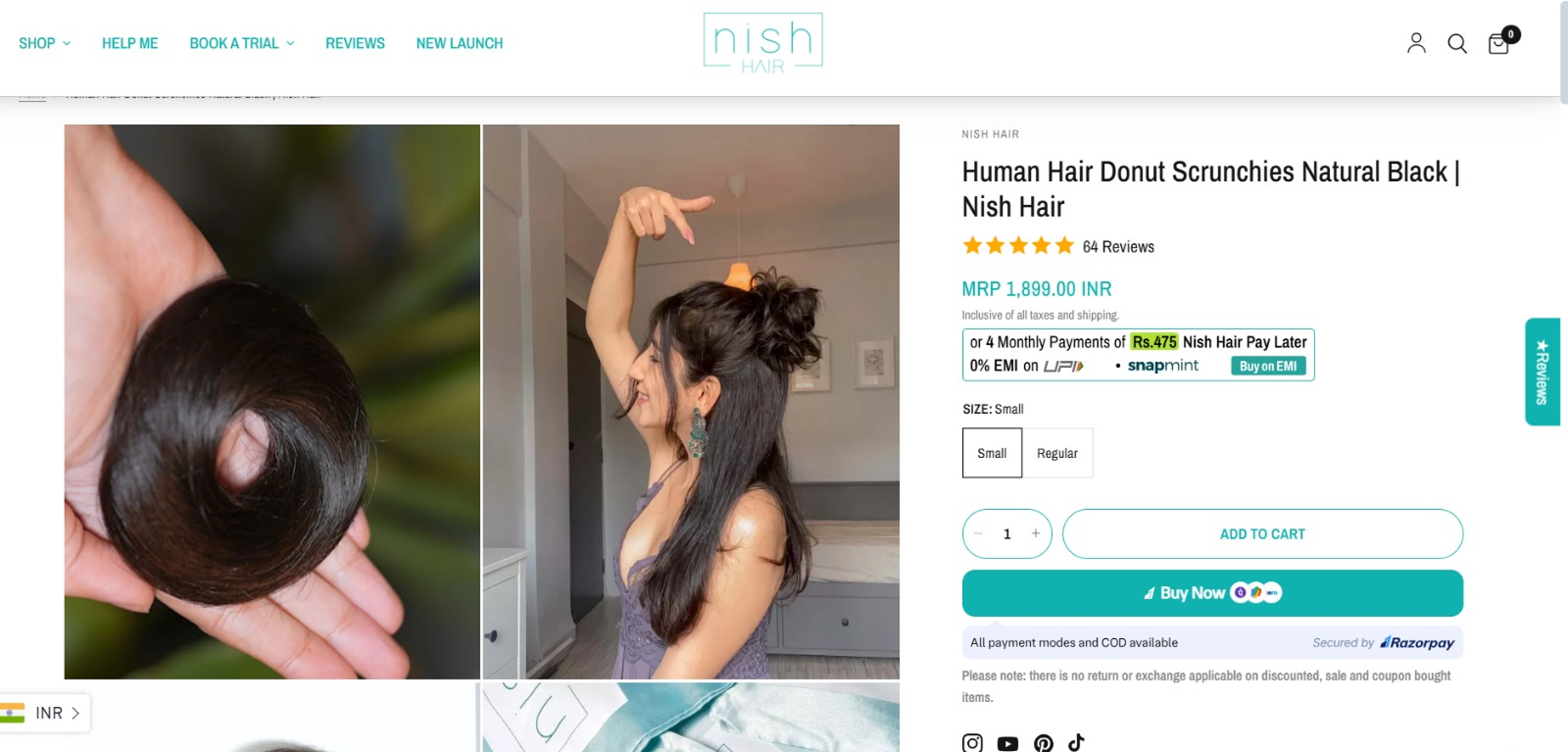
17. Show EMI pricing next to full price
Seeing “₹499/month” feels lighter than “₹5,999.” This small psychological shift can significantly increase ATC clicks as buyers find the product more affordable.
18. Provide multiple payment options
Do not lose your customer just because your website didn’t offer their preferred payment method. Different users prefer different payment methods. Offering UPI, cards, wallets, BNPL, and COD ensures fewer drop-offs at decision time.
19. Offer free shipping or clear shipping thresholds
Unexpected shipping costs kill intent. Clear messages like “Free shipping above ₹999” help users plan and proceed confidently.
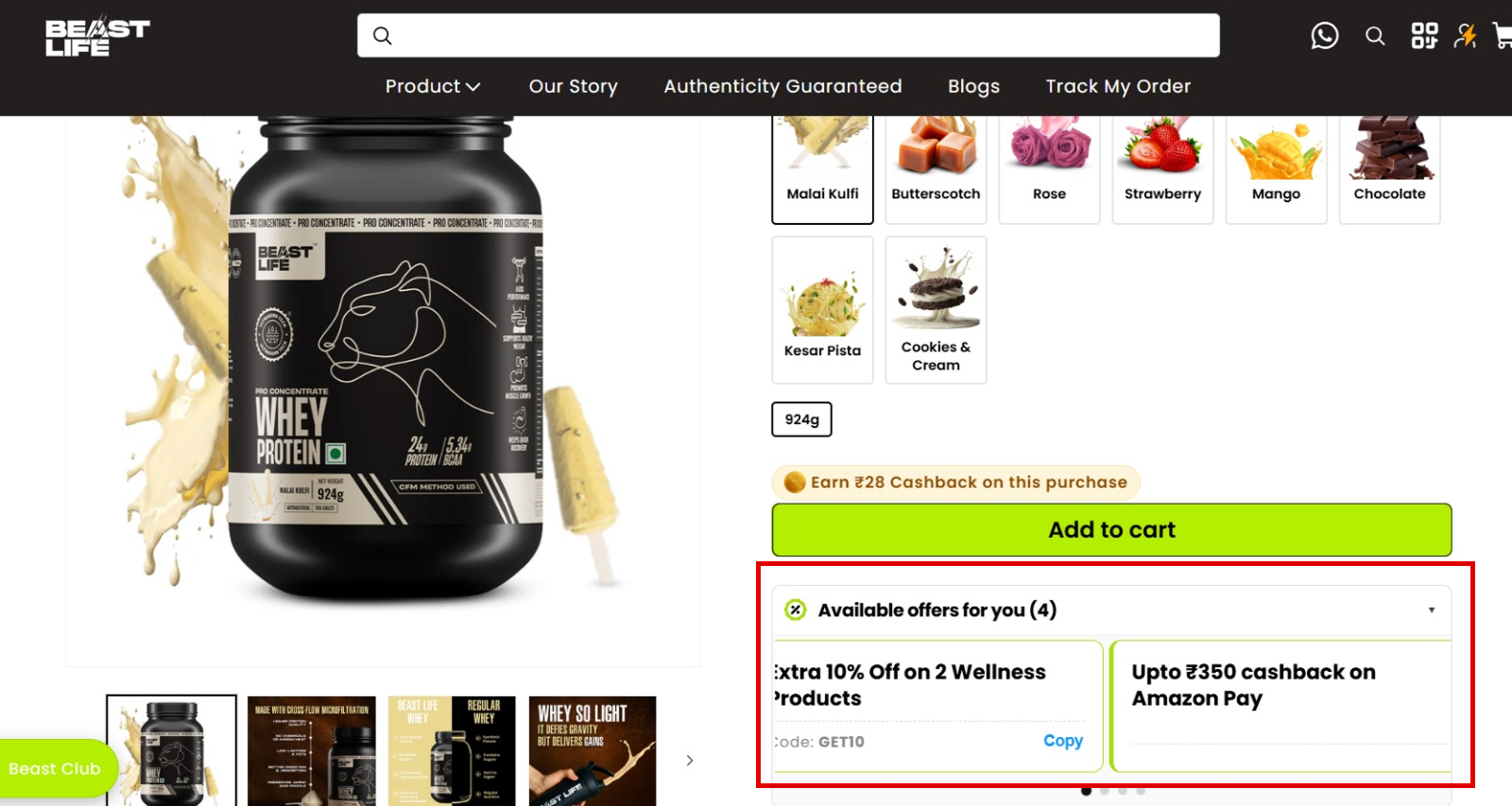
20. Display offers inline, not hidden in popups
When offers are hidden, users miss them. Showing coupons and deals directly on the product page boosts perceived value instantly.
UX & Psychology
We are talking about ecommerce store optimization tips, so how can we miss your users’ experience? Shoppers love feeling like the store “gets them.” That’s where personalization works wonders. Use AI-driven suggestions like “Frequently Bought Together” or “Recommended for You” to inspire add-ons and bigger carts.

21. Reduce cognitive load on the page
Too many elements confuse shoppers. Clean layouts with focused information help users decide faster and click ATC more often.
22. Use clear CTAs, not generic ones
Action-oriented CTAs like “Add to Cart & Save 20%” communicate value. They perform better than plain, generic ATC buttons.
23. Avoid forced account creation before ATC
Forcing sign-ups too early kills intent. Let users explore freely and commit only when they’re ready to purchase.
24. Use personalization where possible
Showing relevant recommendations or recently viewed items makes the experience feel tailored. This increases engagement and cart additions.
25. Optimize page speed (especially mobile)
Slow pages frustrate users. Even a one-second delay can lead to fewer conversions and higher bounce rates.
And if someone leaves without adding to the cart? Reel them back in with personalized onsite popups, showing products they recently browsed or similar styles.
Mobile & Technical Optimization
This should go without saying- everyone browses on their mobiles (okay, almost everyone). If your website is not optimised for mobile phones, you are missing out on sales left and right.
What to do?
26. Ensure fast loading on low-network speeds
Not all users have strong networks. Optimized images and lazy loading ensure smooth browsing even on slower connections.
27. Make product pages thumb-friendly
Large buttons and easy-to-tap options improve mobile usability. If it’s hard to tap, users simply won’t act.
28. Avoid intrusive popups before ATC
Early popups interrupt buying intent. Let users explore first, then nudge them once interest is established.
29. Use smart exit-intent nudges
Gentle nudges like “Extra 5% off if you add now” work better than pressure tactics. They help convert undecided shoppers.
Experimentation & Data
It is important to keep experimenting with the strategies to see what works for your business and your customers.
30. A/B test ATC button color and copy
Small design or copy changes can create big gains. Testing helps you find what actually works for your audience. You can test different colours, font styles, etc. and see what works for you.
31. Track ATC rate by device, source, and product
Not all traffic behaves the same. Tracking helps identify where users drop off and where optimization is needed most.
32. Analyze heatmaps & scroll behavior
Heatmaps show where users pause or hesitate. These insights help you fix friction points before they impact conversions.
Not everyone will hit “Add to Cart” on the first visit, and that’s okay. What matters is how you bring them back. Send push notifications or cart reminder emails to re-capture interest.
For those who need an extra push, personalized retargeting ads that show the exact product they viewed can work like magic. Sweeten the deal with free shipping or a limited-time discount, and watch them reconsider.
Common Mistakes to Avoid
Now that you know how to increase add to cart rate, it’s important to highlight the common mistakes D2C brands, e-commerce and retail platforms make. By avoiding these mistakes, you can not only increase add to cart rate, but also boost your GMV and revenue.
Overloading product pages with too much text
Shoppers don’t want to read a novel. Keep descriptions crisp, clear, and benefit-driven. Too much information can overwhelm instead of inspire action.
Confusing CTAs (“Buy Now” vs “Add to Cart”)
If your buttons send mixed signals, customers freeze. Be consistent with wording and make sure the difference between “Buy Now” and “Add to Cart” is crystal clear.
Hidden costs at checkout
Nothing kills trust faster than surprise charges for shipping or taxes at the last step. Be upfront about all costs on the product page itself because transparency boosts confidence. This is the best way to build a rapport with your shoppers.
Ignoring mobile optimization
Most of your audience is shopping on their phones. If your site loads slowly, buttons are hard to tap, or product images don’t scale well, you’ll lose carts before they even begin.
The fix? Simply follow the 32 proven strategies to improve add to cart rate and see your ATC rate go up. Don’t worry, conversions will follow. And if you need tips on how to increase conversions, read How to increase checkout conversion: 13 Proven Ways.
.png?width=1700&height=616&name=Group%201597882553%20(1).png)
FAQS on How to Increase the Add to Cart Rate