




Key Takeaways
- Cart abandonment is a pricing perception problem
- Higher AOV doesn’t require more ad spend. It requires a smarter pricing perception
- Your brand gets 100% of the order value on day zero. The customer pays in parts; that’s Snapmint’s problem, not yours
- More checkouts completed means more revenue from the traffic you are already paying for
Google Ads CPC is up by 30-100% across categories. Brands in metro markets now spend ₹800-₹1200 to bring a single customer to the product page. And a significant number of those customers, the ones who clicked the ad, browsed the product, added to the cart and left the moment they saw the full price at checkout.
India’s D2C market is heading to $60 billion by 2030, and yet 70% of carts get abandoned at checkout. The gap is a ₹20,000 price tag vs a manageable monthly number. EMI closes that gap. In 2026, skipping EMI is leaving money on the table.
The Core Problem: Conversion Friction at Checkout
You’re paying more to acquire customers, who you’re losing at checkout. Google Ads CPC is up 30-100% across D2C categories. Brands in metro markets are spending ₹800-₹1200 to bring one customer to a product page, but a significant share of those customers hit the price and leave.
There’s a term for it, “payment pain,” that gut drop when a large amount leaves your account all at once. Every abandoned cart here isn’t a lost lead. It’s a paid-for lead that converted all the way to intent, then stopped at the payment wall. That’s easily one of the most expensive places to lose a customer.
“70% of shoppers abandon cart due to cost shock at checkout: Baymard Institute, 2025”
EMI = Removing the Biggest Growth Bottleneck
EMI works because monthly installmets feel lighter than one painful swipe.
Makes Products Instantly Affordable
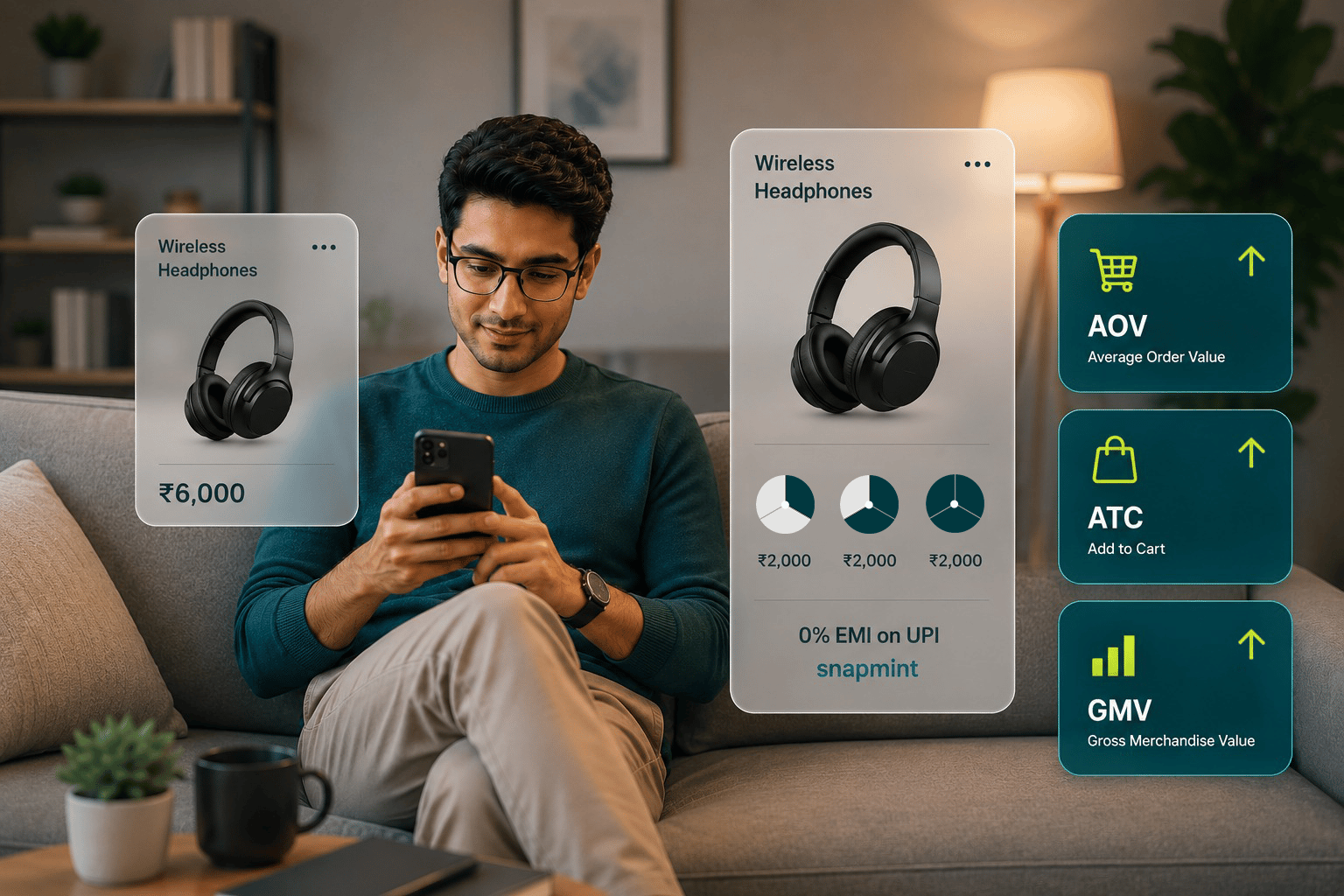
When the number in the customer’s head goes from ₹10,000 to ₹833/month, it stops competing with rent and starts fitting into a discretionary monthly spend, which is why it converts better.
Conversion Rates Rise
When EMI is visible at the product page, it changes how customers see the purchase. The smaller monthly number becomes the decision point.
Brands using Snapmint see a 25-30% uplift from product page to cart conversion. For a brand spending ₹50L per month on acquisitions, that’s crores in recovered revenue from the same traffic.
Blue Tyga, a functional fashion brand selling sun protection clothing priced above ₹1499, saw a 21% conversion rate uplift after integrating Snapmint, with EMI contributing to 23% of overall sales.
Superkicks, a premium sneaker retailer where an average order runs ₹7,000 - ₹10,000, recorded a 18% conversion boost, with EMI buyers showing a higher AOV than the brand average.
Boosts Average Order Value (AOV)
Once the monthly cost becomes the focus instead of the total price, customers tend to upgrade. The ₹15,000 variant versus the ₹10,000 now feels like just ₹415/month more, so the gap feels negligible and customers upgrade without hesitation.
Bundling is a natural purchase behaviour in the beauty and personal care buyers. When someone shopping for skincare is already considering buying a ₹2,500 serum, the incremental monthly cost of adding a ₹1,200 sunscreen and a ₹900 cleanser to the cart, spread across three months becomes more negotiable. EMI becomes a bundling accelerator in beauty and personal care.
Nish Hair, a premium hair extensions brand, saw a 30% rise in AOV after Snapmint integration, with customers moving up to ₹5,000+ basket sizes.
McKinsey finds consumers engaging through flexible payment options spend 1.5-2x more than those who don’t.
Why EMI is a “No-Brainer” in 2026 (Shift in Consumer Behavior)
Traditional EMIs are guarded by credit cards, and only 5% of Indians hold a credit card. This factor alone excludes a majority of the addressable market, including the growing buyer cohort in Tier 2 and 3 cities, which contribute over 60% of India’s e-commerce shipments today.
Gen Z and millennials, who drive premium D2C, are credit-lite. PwC forecasts BNPL and EMI adoption among Indian millennials will grow tenfold in 5 years.
Consumer comfort with EMI has grown significantly. Approvals are quicker, often in minutes, not days. The checkout feels smooth.
If you’re not offering EMI, your competitor already is. At this point, the checkout experience is part of the product.
The Biggest Myth around EMI is Delayed Payments for Brands
The Myth
EMI will delay my cash flow. My customer pays over 6 months, so my revenue comes in over 6 months, while I’ve already shipped the order.
The Reality
With Snapmint, brands receive 100% of the order value upfront in T+2 days. The customer repays Snapmint in installments. You bear zero collection risk and zero cash flow delay.
You get paid like a full-payment order, while your customer enjoys EMI. Snapmint underwrites the credit risk entirely, evaluating the buyer’s repayment ability, disbursing the full amount to the brand, and managing collections directly with the customer.
The brand carries zero exposure on the loan and zero collection overhead.
|
Snapmint has been a true growth partner for us. With their seamless integration and proactive support, Snapmint EMI transformed our business - delivering 21% conversion growth, 45% GMV uplift, and strong Tier 2/3 adoption on luxury bags over ₹2,000.
Founder, Miniwesst |
What Changes When You Add EMI
Higher Conversion Rates
Adding EMI changes how customers buy. You see more checkouts completed, lift conversions.
Increased Revenue Without Increasing Traffic
Revenue increases without needing more traffic because you’re monetising the same visitors, better.
Repeat Purchases & Higher Basket Sizes
Customers are more likely to come back and make a purchase again. Basket sizes also go up since upselling feels more manageable.
Use Cases by D2C Categories
- Fashion & Apparel
Premium fashion always hits a price wall. Wedding wear, designer pieces are a high-intent ticket. Titan, the iconic watch brand, has seen a 20% surge in AOV with Snappmint.
- Electronics & Gadgets
This is an EMI native category. Almost 70-80% of iPhones bought in India are on EMI. The intent is there, the friction is price.
- Home & Furniture
Big-ticket, slow decisions. Customers keep delaying these purchases because of the upfront cost. EMI takes that pressure off, especially for essentials like beds, sofas, and work setups.
- Wellness & Fitness
Equipment and memberships get pushed aside because they feel expensive in one go. EMI reframes it as a monthly commitment.
.png?width=1700&height=616&name=Group%201597882553%20(1).png)
Why EMI Works Especially Well for Mid-High AOV Brands
EMI on UPI, in the ₹3000 - ₹25,000 AOV range, improves conversion and lifts basket size, without discounting. Margins stay intact, and the brand still stays premium.
How Snapmint Powers EMI for D2C Brands
- Instant EMI for customers on UPI. No credit card. No CIBIL score, no waiting for bank approval
- 100% upfront settlement in T+2 days.
- Zero risk on collections because Snapmint handles all repayment responsibility
- Easy integration with Shopify and 50+ other integrations
- Transparent checkout. No hidden charges, no friction for the buyer
- Tier 2 & 3 reach. Buyers who will never own a credit card, but want exactly what you’re selling
EMI Option for Consumers is No Longer Optional
India already has 290 - 300 million online shoppers, and that number is expected to hit 500 million soon. The next 200 million buyers are coming from the tier 2 and 3 cities, which are more UPI-native. The brands that win it will be the ones that make checkout feel possible for the 95% of consumers without a credit card, but with a genuine intent to buy.
Turn a ‘not now’ into a yes. See how Snapmint’s EMI on UPI integration improves conversions and AOV for your brand.